
When I first started reading Solidarity Forever, I have to admit I felt a bit overwhelmed by the sheer listing of facts. Robert Lawson is primarily a collector and the book is very much “fact city”, a comprehensive document that, at first, can feel more like a reference work than something you read straight through.
However, as I got further into it, I found myself completely drawn in. The book is packed with information not only about Stevie Van Zandt, but also about Southside Johnny, whose work I’ve loved ever since I discovered the album Better Days (1991). Their careers have often run in parallel, sometimes even symbiotically, with Stevie contributing countless songs, camaraderie and stories. Of course, Bruce Springsteen (my personal hero) is featured heavily as well. I was amazed at how many familiar names (at least to a Springsteen and E Street Band fan) appear right from the start: Garry Tallent, Danny Federici, Roy Bittan, Max Weinberg and others repeatedly surface in different contexts, showing just how interconnected the music scene was back then.
I laughed at Lawson pointing out a small timeline mistake in Bruce Springsteen’s autobiography Born to Run. Bruce gets a date wrong, which Lawson gently corrects, noting that Bruce has more important things to think about than dates from thirty years ago, and that’s where Lawson comes in.
What really brings the book to life are the small details, along with comments from Stevie and other key figures that are interwoven throughout the book. In one case, Lawson has even uncovered a photo that the main character himself has never seen before, prompting reactions along the lines of “What the fuck is that? Holy shit, ’64?/ …/ I can’t believe this. Not only have I never seen that before, I can’t believe I could even play back then.” Moments like these keep the book from feeling dry. Lawson goes well beyond the big moments, paying attention to things like TV and radio appearances, guitars, stage clothes, cover versions, album reissues and other memorabilia. It’s the kind of stuff die-hard fans actually care about.
Reading the book also sparked personal memories. Lawson mentions shows I attended myself, like the show in the Roundhouse in London on November 4, 2017, where Paul McCartney turned up as a surprise guest. Moments like that made the book feel especially vivid and alive for me.
It also reminded me of how much Stevie Van Zandt has, in different ways, interfered with and influenced my own life, not only as Bruce Springsteen’s long time ”consigliere” and musical director, but through The Sopranos, Lilyhammer, TeachRock (I’m a teacher myself) and the Disciples of Soul. Lawson’s attention to detail captures exactly that: how Stevie’s work keeps popping up in unexpected places over the years. I am a fan (not die-hard but still) and there’s no doubt that Stevie might be the coolest guy in rock ’n’ roll.
Even the physical aspects of the book are appealing: the softcover feels nice in the hands, and the purple cover with a striking photo of Stevie playing guitar fits perfectly.
All in all, Solidarity Forever is a beautiful complement to Stevie Van Zandt’s own memoir, Unrequited Infatuations. It’s not necessarily a book for casual readers, but for Stevie fans and for those who enjoy digging into the details behind the music.
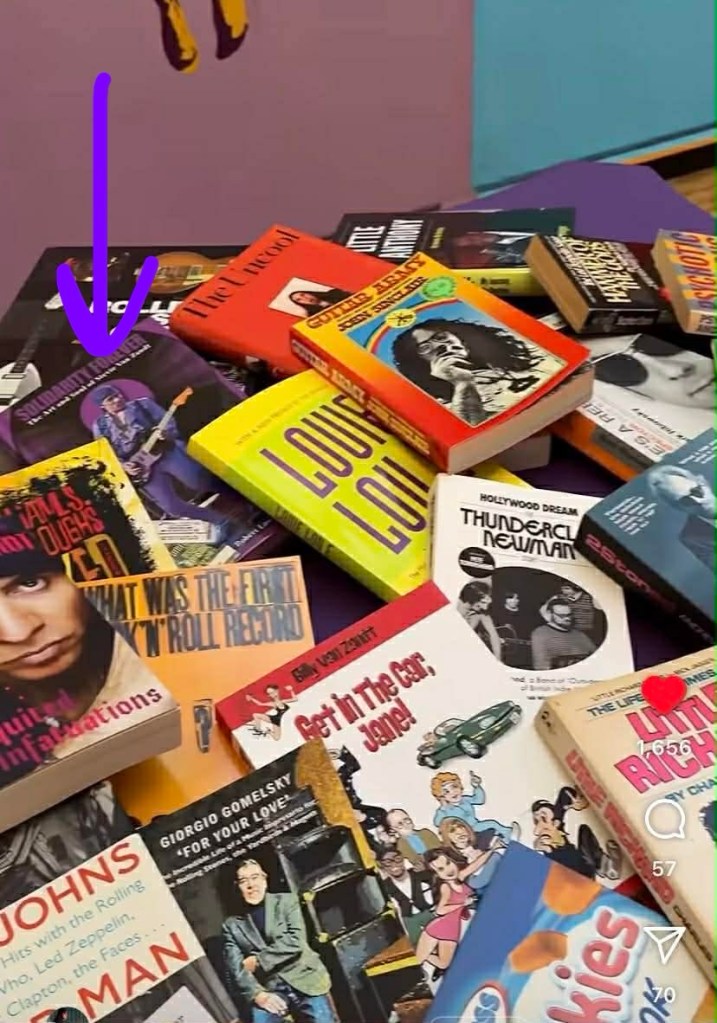
P.S. On December 13, Stevie posted a short reel on Instagram from his legendary NYC loft. In the clip, you see a table covered in books, which Stevie explains are the sources TeachRock uses for its lesson plans. As the camera pans across the table, you can actually spot Solidarity Forever among the stacks, the very book I’ve been writing about here (!) That felt pretty cool and like a real nod to the importance of Lawson’s work.
Read more:
I Don’t Want To Go Home (Little Steven and the Disciples of Soul, 20 July, 2018)
Where the Bands Are (Little Steven and the Disciples of Soul, 1 June, 2019)
Where the Bands Are (Little Steven and the Disciples of Soul, 5 August, 2019)
Talk To Me (Southside Johnny and the Asbury Jukes, 22 Mars, 2018)


 Stray Bullet
How much did you pay for this book? Never heard about this and of course, after your review, I went straight to my favourite online sellers… ouch, it costs 80 EUR!
LikeLike
😱 The one I bought cost around 28 Euro.
LikeLike